
2025 Coach of the Year – Libby Loveday
Libby Loveday has been a Flame coach for five years. Commencing in 2022 with the U10 GSAP, following into 2023 with the U11 GSAP and then the U12 GSAP in 2024. This year, Libby has taken on a dual role, as the U15’s coach and the Youth Girls Program Assistant.
However, in 2025, coaching the U14 squad, Libby received the prestigious FNSW Coach of the Year award. A truly amazing recognition of Libby’s commitment and dedication to coaching.
We caught up with Libby to find out a little bit more about her coaching journey, her inspirations, the challenges she has faced as a coach, how she juggles her dual role of playing and coaching and more.
Here’s what Libby shared with us:
Libby, you’ve been coaching with Flame for five years now, but when did you first start coaching?
‘I first started coaching for Flame in 2022 when I was 17, taking the U10s GSAP team. My coaching journey actually began much earlier, around the age of 13, when I helped my mum run the Mini Thistles program in Helensburgh for children aged 2–5 who were just starting soccer.
From there, I went on to coach two all-girls U6 teams before beginning at Flame. While coaching at Flame, I also continued helping with various age groups at Helensburgh over the years, which allowed me to further develop my experience working with players of different ages and abilities.’
It’s fantastic that you have had a great lead into your coaching journey, with your local club and then being able to move into the representative space with Flame. Looking back on when you began, who or what inspired you to start coaching?
‘Before I started playing for Flame, both of my parents coached me throughout my junior years — first my dad, and later my mum when I moved into all-girls football. While playing for Flame, I was fortunate to have a great coach, but I never really had a female role model in the sport.
When I first began coaching alongside my mum at Helensburgh, I quickly realised how much I enjoyed working with young players. It wasn’t until I started coaching an U6 girls team, as well as working with Sydney FC, at their all-girls clinics, that I discovered coaching was something I was truly passionate about.’
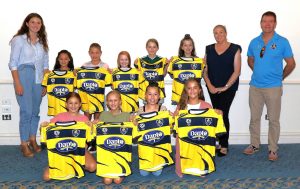
In the time that you have been coaching, you have been exposed to a wealth of coach’s experience and knowledge, from your parents to Sydney FC coaching staff and with Flame coaching staff. I’m sure that each of these influences has passed on so much information, knowledge, tips and advice to you but if you had to pinpoint one thing, what has been the best piece of advice that you have received as a coach?
‘The best piece of advice I’ve received as a coach is that every player develops at their own pace, and your role as a coach is to create an environment where they feel supported, confident, and motivated to keep improving. Especially when working with younger players, building their enjoyment and confidence in the game is just as important as developing their skills.
That advice has stayed with me because it reminds me to focus not only on performance, but also on helping players grow as individuals and enjoy their football experience. Especially coaching a lot of girls who have come across to flame from previous clubs where they weren’t able to flourish and grow.’
That’s a great piece of advice, making you challenge yourself as a coach to provide an all encompassing experience for your players and not just focusing on the football skills and drills aspect of coaching. It’s not easy to keep reinventing yourself and to me it seems that this would be something you would need do as a coach, as there are many different personalities and many different ways that players learn, so getting those football messages across would employ different skills each time you coach a new squad.
With that in mind, you’ve coached a wide range of age groups and players at different stages of their football journeys, as well as worked alongside coaches with varying levels of experience and at different points in their coaching development, tell us about the challenges have you faced as a coach and how have you overcome them?
‘One of the biggest challenges I’ve faced as a coach has definitely been, being a young female in the sport. When I first started coaching at Flame, opposition coaches would often assume I was the manager or physio and walk straight past me to shake the first male’s hand instead. At the time, that was difficult, but as women’s sport has continued to grow and gain more recognition, I’ve noticed a real positive shift in the respect and opportunities given to female coaches.
Over time, I’ve learned how to handle those situations with confidence. I now make a point of introducing myself straight away, shaking hands first, and establishing myself as the coach from the beginning.
Being only 21 has also brought its own challenges, particularly when working alongside older and more experienced coaches. At times, I’ve felt like I needed to prove myself, making sure I contribute to conversations and demonstrate that I understand the game and what I’m teaching. At the same time, I’ve learned the importance of staying humble and being open to learning. I know I still have so much experience to gain, and developing the ability to take on advice and constructive criticism has been a really important part of my growth as both a coach and a person.’
You’ve certainly had some tough challenges but fantastic to see that you have found the confidence to deal with each situation and move forward with determination to continue to learn, grow and develop as a coach and a person.
Not only do you have the challenges of being a coach, you’re also a Flame player, how have you found juggling both these roles?
‘Juggling both playing and coaching has actually been something I’ve really enjoyed. Personally, I haven’t found it too stressful, as long as I stay organised and fully committed to both roles. I think being a woman probably helps as well — we tend to be pretty good at multitasking, and I’ve learned how to balance the demands of both playing and coaching effectively. The biggest challenge has probably been managing other people’s expectations rather than the workload itself. At times, external pressures or a lack of understanding from others, including coaches, have made balancing both more difficult than it needed to be.
I also think continuing to play at a high level is really important for my development as a coach. Being an active player allows me to properly demonstrate skills and techniques to the girls because I’m still doing them myself every week. It also keeps me constantly thinking about football, learning, and understanding the game from a player’s perspective, which then helps me coach more effectively.
Playing and coaching at the same time has given me a much broader understanding of the game, and I think both roles positively influence each other. The experiences I have as a player help shape the way I coach, while coaching has also helped me become a more thoughtful and aware player.’
So, playing and coaching, for you, go hand in hand, each role complementing the other. Managing different roles can be difficult but from what I can see, your commitment, focus and organisation has been the key to a positive, effective balance between the roles you hold.
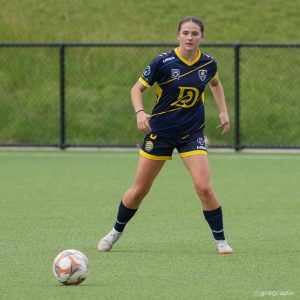
What about setting goals? Particularly when you first started coaching, did you set yourself a goal? If so, what was it and have you achieved that goal?
‘I’ve never really set a specific end goal for myself as a coach or focused on where I want to end up. Instead, I’ve always focused on the experience I want to provide for the players I coach. My main goal is to help players become the best version of themselves, both on and off the field.
What I love about that goal is that it’s limitless, it’s something I can continue working towards throughout my entire coaching journey. Of course, coaching first grade or even one day being involved with the Matildas would be an incredible achievement, but I find it far more fulfilling to have goals centred around the players rather than myself.
For me, the most rewarding part of coaching is knowing that what I do can positively impact the people I work with. When your focus is on helping others grow and succeed, the personal achievements often come naturally along the way — sometimes in ways you never expected, like receiving the award I did. That’s why my goals have always been more about the players and the environment I create for them than about personal titles or recognition.’
Setting goals around your players and not specifically for yourself certainly links back to your ‘one piece of advice’ about creating the best possible football learning environment for your players. Seeing players succeed from the environment and foundations you have provided has to be rewarding and a great goal to achieve.
So, as a final question what is the most rewarding aspect of coaching for you?
‘The most rewarding aspect of coaching for me is seeing the players I’ve worked with achieve things they’ve worked hard for and grow in confidence along the way. Those achievements can be anything from a player earning a starting spot on the weekend, improving a skill they’ve been struggling with, or simply gaining more belief in themselves and enjoying their football more.
It’s also incredibly rewarding watching players progress to higher levels of the game, whether that’s leaving Flame to join A-League academies or having opportunities to experience Emerging Matildas programs and competitions. Seeing players reach those levels after watching their development firsthand is something really special.
What makes coaching so fulfilling is knowing that you’ve played even a small role in helping players grow, not only as footballers but also as people. Watching them gain confidence, resilience, and ambition is just as rewarding as any result on the field.’
Definitely having a hand in a players achievements at any level, has to be a proud moment for every coach. As you have said, knowing that you have played even the smallest part in a players growth and development as a footballer, is extremely fulfilling and rewarding. There are so many aspects to coaching that players don’t often see, not just the hours of preparing but finding the right connection with your players that will help you get your message across, enabling them to succeed, no matter how big or small the task is that you have for them.
Libby, thank you for providing a great insight into your coaching journey. It was very interesting to learn how you started, the challenges you faced and overcame, the people who influenced you and the great advice that you carry with you that you and strive to emulate, as you continue on your coaching pathway.
Congratulations on your Coach of the Year award. A well-earned recognition of your hard work, commitment, and dedication.
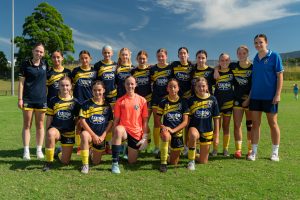
Photos courtesy of Gragrapix
Comments are closed.